April 21, 2022

Selamat Ulang Tahun

Celebrating my blogs birthday with loads of Batik related things to read, watch and to enjoy!


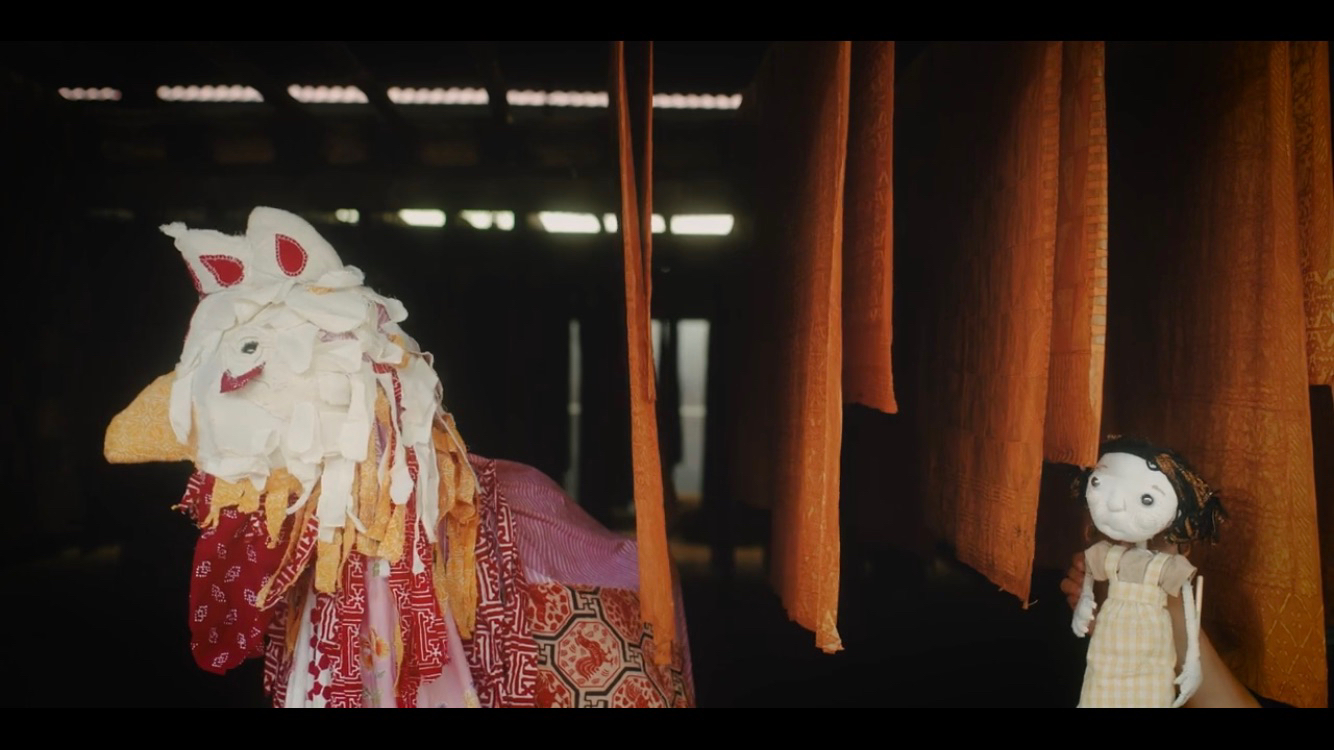
Still from Maracosa by Papermoon puppet theater


Today my blog turns 13 years. It been quite the journey! From a travelblog, to a place where I could share my new inspirations and interest on batik to a more research- and update-based blog all about my journey to Batik.
While I promise myself to update my blog regularly, I have so many places where I can share my stories now that they hardly find their way here anymore. Buttt, I can update you, dear reader, of where you can find my stories, what else I have been up to and what other exciting batiks things are out there. 
So Selamat Hari Kartini, Happy birthday to my blog and enjoy!

Batiks at Maison Amsterdam 


Display of Batiks at Maison Amsterdam
Photo by Sabine Bolk


In January a new blogpost for Modemuze went online. In October we visited the exhibition ‘Maison Amsterdam' at De Nieuwe Kerk in Amsterdam. Because there was Batik on display, I suggested to make a more in-depth blog about it. My post went online during the lockdown when museums still were closed. The exhibition ‘Maison Amsterdam’ was made around the theme ‘Freedom’. In the exhibition Batik is shown with loans by wearers & with a suite by Guave. In my post I highlight the wearers of the Batiks shown and unravel some myths. In the exhibition a photo of one wearer is shown, but another photo of a wearer was send to me when I contacted the family. Both have an interesting story to tell, but for me the most remarkable aspect is how they are displayed. Let’s take look. The one we start with is most prominently in the display. A sarong & kebaya on a mannequin owned by Ida Glasius and on loan from granddaughter Arletta Kaper. First thing I saw was that the batik was displayed upside down, and that it was not a batik, but an early silkscreen printed textile. Batiks displayed upside down (on & offline) are a common mistake here, but there was more…The only photo of a wearer in this display is that of Ida Glasius. Ida wears a similar loose kebaya on the photo and a different Batik, but it is also upside down. Both sarongs have a Garuda pattern; one with only the wings, Lar, and one with the complete bird, Sawat, Garuda motifs are usually worn with the wings pointing up. You can compare it with a horseshoe, upsidedown is bad luck. Whether Ida Glasius wore the Batik upside down as a fashion choice, statement or by mistake, we will probably never find out, but an interesting story never the less.
Since writing my post for Modemuze I have found more photos of wearer with their Batiks upside down and also saw another sarong on display upside down, online, at Kunstmuseum in Den Haag. Something to explore further, perhaps there is a simple explanation for it or it is just a very common mistake...

Photo of Ida
Credit: Arletta Kaper

The other Batik is from Fientje Hanna Hahury Lawalata. Fientje’s sarong is a little more hidden in the display. A pity, since it is the only real one that is signed. It was photographed by Amsterdam Museum. In the kepala is the signature ‘Nj Gan Kaij Bian’, also known as ‘Gan Kay Bian’. In the NMvW collection is similar batik from this batikentrepreneur (TM-5663-1180). The family send me a photo of Fientje wearing the batik posing together with her family. It is very special to have a photo of the wearer. We can date the batik better, since the photo is taken around 1947. Fientje wore sarong kebaya every day, even after migrating to the Netherlands. Her family let me know they found it so special her clothing was being displayed and think Fientje would be very proud.

Display with loans by Norma Hahury and Arletta Kaper
Photo by Sabine Bolk

Sarong signed by Gan Kay Bian
Credit: Amsterdam Museum 

Fientje Hanna Hahury Lawalata with her mother, husband and daughter. 
Credit: Norma Hahury


Batikworkshops


Student takes Batik out of Indigobath at HKU
Photo by Sabine Bolk

After the last lockdown, giving workshops is up and running again. Next to finally returning to De Vrolijkheid for a fun workshop creating Colour-Fans, I have been giving Batikworkshops. First one of the year was a last-minute-short-intro on Batik for Artstudents at the HKU in Utrecht. The students had a week of learning about Blue, dyeing with Indigo, blockprinting, Shibori organised by Craft Council Nederland and I gave Batik. The creations made in the morning were dyed blue synthetic & natural by the students themselves.

Batikworkshop at Cultuurspoorhuis in Middelburg
Photo by Sabine Bolk

Removing the wax
Photo by Liesbeth Labeur


End of last month I had a three day mini-batik-holiday in Middelburg. I gave two days on two locations the workshop and removed all the wax on the third day. We had to reschedule this workshop twice, but very happy it could finally take place, in good company & with such good weather. Thank you Liesbeth Labeur for organising, thanks Pennywafelhuis & Cultuurspoorhuis and thank you to the participants.

Documenting each others Batiks at Lunteren
Photo by Sabine Bolk

Right after returning from Middelburg, I gave an evening workshop at Stichting Ana Upu hosted by Mantelzorgpunt in Lunteren. I gave a talk there in October and they asked me if they could also get a Batikworkshop by me. We had only two Monday evenings, so I adapted it to fit our time-schedule and was amazed what we could create in just 3 hours basically. My oldest participant was 93, although she found it a very difficult technique she still created several small pieces of Batik. I loved that at the end of the second evening everyone was making photos of each other’s work.


Watch online


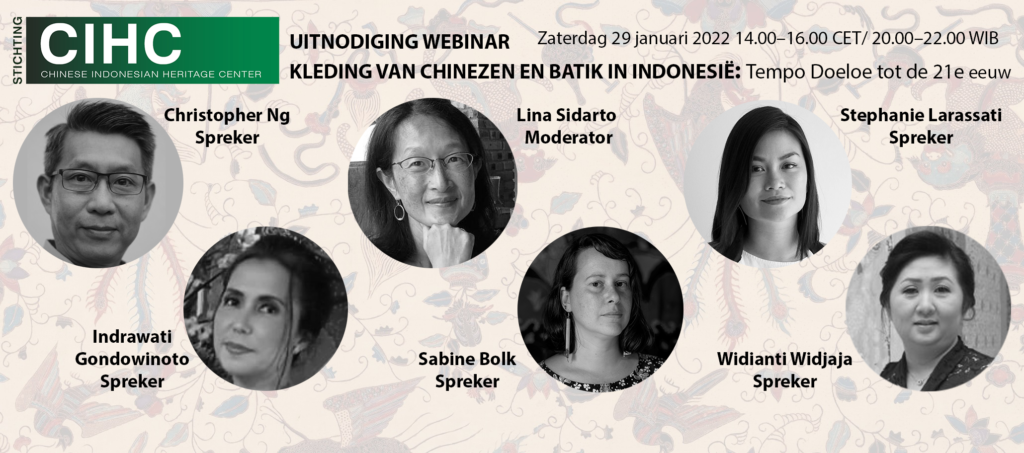
In January I gave a talk for CIHC on 'An overview of Peranakan Batik in Dutch Museums' and a little visual trip to Lasem. It was great to share how to access the archives and how to find these beauties kept in Dutch depots. I was also honoured to be a speaker between a Batiklegend as Ibu Widianti of Oey Soe Tjoen, Ibu Idrawati sharing her Gan family Batiklegacy and scholar & collector Christoper Ng.

You can watch the talk back on Youtube

Business card for Suze Zijlstra designed by me in front of original design

Two years ago historian Suze Zijlstra asked me if I knew someone to design her business card. She wanted something maybe with batik and referring to her research & upcoming book ‘De Voormoeders’. I sayed I would love to do it. When we had our first lockdown I started designing her card. A year later her card was printed and in September 2021 her book was published. Since up till now Suze did not had many opportunities to hand out the card, I thought it would be nice to share the card, the inspiration & her book in a Batik Consultation video. We talk in depth about one of Suze's ancestors, Tan Kim Njo, and the batiks that she wore. And how those batiks inspired the business card I designed for Suze.

Now online on Youtube

Batik Consultation with Suze Zijlstra, historian and author of the book ‘De Voormoeders’ that was published last year. We talk in depth about one of Suze’s ancestors, Tan Kim Njo, and the batiks that she wore. And how those batiks inspired the business card I designed for Suze.


Newsssss


I am so exciting to share this news here. I have two talks this upcoming May. First one on 3 May, Tuesday evening, at the Weltmuseum in Vienna, Austria. My first talk abroad since the start of the pandemic. I have given talks on international stages these past two years, thank you, but this one will be for a live audience on location! I am so happy I get to share my research of the past couple of years here and dive into the depot during my visit there.

For more info and to register go to www.weltmuseumwien.at


My second talk will be for The Association of Dress Historians Annual New Research Conference 2022 for their New Research in Dress History Conference held offline at National Museum of Scotland in Edinburgh and online. My first conference! I feel like a proper researcher now ;)! 
In my talk 'A Batik collection fit for a Lady' I will share my current research in which I focus on the wearer, especially on ladies that were of European descent who dressed in Batik sarongs themselves during colonial times in Indonesia. Extensive collections have been kept in the Netherlands, privately and in museum-collections. These kept batik-collections provide us still with new interesting insides and different angles to share this history. For this presentation I focus on 41 batiks that were donated by Jonkvrouwe Anna Cecile Aurélie Jeanne Clifford, Jonkvrouwe as in damsel. The donation is an unusual wardrobe for a lady that apparently had never been to Indonesia herself. The batiks most likely belonged to her mother, Theodora Adriana Lammers van Toorenburg, who was born in 1852 in the former Dutch East Indies. This collection provides us with interesting insights into what was worn by whom and how the wearer can provide us with provenance that is often overlooked in batik-research.

For more info check dresshistorians.org
For tickets and more on the program see www.eventbrite.co.uk


See-Do-Enjoy


Still from Maracosa by Papermoon puppet theater


'MARACOSA'  by Papermoon Puppet theater
till 10 June 2022
Yogyakarta ID

One of those things I wish to visit myself. The exhibiton 'MARACOSA'  by Papermoon Puppet theater at the moment held Omah Budoyo in Yogyakarta, Indonesia. It runs till 10 June 2022, so if you nearby Ayo! I saw the stunning puppetshow they made online, all about Batik and how the love for it need to be passed on to a younger generation for it to survive. It make me cry out loud, so beautiful and strong. A must-see if you can!

Display of 'Fake Batik', object selection by my at De Lakenhal

Misleiden at De Lakenhal
till 12 June 2022
Leiden NL

Exhibition 'Misleiden' at De Lakenhal in Leiden and the publication with the same title both include 'Fake Batik'. Exhibition runs until 12 June 2022 and the book is now for sale at bookstores & online

Colonial Stories by Amsterdam Museum
till 18 September 2022
Amsterdam NL

The exhibition 'Colonial Stories' at the temporary location, Amstel 51, of Amsterdam Museum including several Batik pieces and even imitation batik. The exhibition runs until 18 September 2022. 

Langs Geborduurde Wegen at Museum Kantfabriek
till 25 september 2022

Exhibition made with the collection of Ien Rappoldt showing the traditional wear and textile traditions, including Batik, from Southwest-China

Kleurstof at Textielmuseum
till 2 October 2022
Tilburg NL

Exhibition 'Kleurstof' at Textielmuseum in Tilburg dives into the world of colour. It includes recreated old recipes (which I tried one of), the routs of colonial trade (which I worked on too) and much more.


January 14, 2022

Selamat tinggal 2021

A little late with my last post of 2021, but since everything goes a little different these past two years, better late than never.

So Goodbye 2021 and Welcome 2022. 

After my last post in October, I worked non-stop, I think my busiest yet, but I am definitely not complaining. I was really happy I had all these amazing projects I could work on and can keep on working on throughout 2022, with wonderful & inspiring people! A very welcome distraction in 2021 and it’s so rewarding to be able to make batik my fulltime job! Only wish for 2022 is a little less fulltime, so it leaves more room for the unexpected and my creativity. 

In this post I am looking back at some of the projects and activities of the past months, ayo & enjoy!

Me & a Batik by Maria Paulina Carp


Storytelling 


‘Little Red Riding Hood’ 
A5 card 
printed on partly recycled paper


‘When I started my journey to Batik in 2009, I wasn’t aware of the rich knowledge that was available in the Netherlands. My first journey brought me to Central Java where I searched for batikmakers to learn more about the technique and meaning behind the motifs. During this journey I was of course confronted with our colonial history, but in a different way than I expected. 
During a visit to the Batikmuseum Danar Hadi in Solo, after looking at rooms filled with dark-brown coloured royal batiks, I was standing in front of a brightcoloured batik with Little Red Riding Hood on it. The guide laughed, saying something like “You will like this one, it is Dutch Batik”.
“Batik Belanda” I learned a few days later, when a friend handed me a book with the same title. These North-coast batiks from Java are filled with fairytales, flowers and even war scenes. 
This was the start of a quest that brought me in museumdepots, to researchers and even descendants of batikmakers. All in the Netherlands. Because here I could find a lot on Batikhistory. Maybe even more is kept here than in Indonesia…’

I made this illustration to go with an article that got published in the magazine BATIK! More about that later in this blogpost. The intro here above is from the article too. 
The last 2,5 years I have been doing research on batiks made between 1840 & 1890 kept in Dutch collections that are described as having an (Indo-)European influence. A journey that brought amazing batiks & findings on my path! I will be working this year on getting more of the results of this research out in different ways while continuing my research. In my follow-up research I will focus more on the wearers and finding out more on batikmakers, as I shared in my previous post ‘Pukul Terus

I had it printed as a thank you card, but it is also for sale. To order the card send an email to at sabine@sabinebolk.nl.


Shishani & Sisterhood


This year we got to perform the ’Shishani & Sisterhood’ show three times. All three were amazing experiences that brought me out of my comfort-zone completely, but into a great group of creative souls. I am so thankful for this, thank you Shishani for bringing us together and letting us create this great show. 
The third show was live streamed from De Melkweg for the SIPA festival. Still can believe I was on stage at PAARD and Melkweg, wow! You can rewatch it here. 


Zine 'The Penguin & The Batik'


Making of the zine
Photo by Michael van Kekem

This last year I have been thinking a lot about my Art practice and how what I do mostly is storytelling. The medium in which I tell the story usually comes after the idea for a story to tell/share. Will I write a lot of articles, there are some stories that need a little more, or better said something different. I was very happy I could explore so many different ways of storytelling this year. Through publications, online talks, many social media post. Through videos on Youtube, on stage, even in batiks. And in my first ever Zine! 
It realised I hadn’t shared it here yet. The Zine was already in the making a longtime, but the final full Riso printed version was ready in March 2021. 
The Zine is on one of those Batik story that I wanted to tell for a long time already & a little Zine in Riso turned out to be the perfect match for this strange tale: ‘The Penguin & The Batik’. 
In 20 pages the story from the moment I discover a penguin on a Batik. A visual story that is not looking to answer questions, but more a way of understanding the quest.
I made the Zine with the great guidance & support of Michael van Kekem at his studio in Rotterdam (NL). I hope to create a new Zine this year!

Zine 'The Penguin & The Batik'
Full Riso print
20 pages 
Only 4 left in stock
Send me an email to order at sabine@sabinebolk.nl


Magazine BATIK!


After we, me, RomĂ©e Mulder and Myrthe Groot, hosted the Batik Stand in 2019, the Stichting Tong Tong invited us to collaborate to make Batik the theme for the next TTF. Unfortunately the TTF couldn’t take place in 2020, so we hosted an online Batik Stand instead. 
From beginning of this year till about July I was working, together with Florine Koning & Leslie Boon, on this magazine. Again the TTF couldn’t take place in September, but the idea was to publish the magazine either way. With a lot of things going on behind the scenes, the magazine was published end of November 2021. 
The magazine all about batik has several articles by my hand, interviews with Guave, Batikmaker Miss Nurul & batikscholar Renske Heringa. A lovely illustrated tutorial how to wrap a Batik by Jeroen Krul, great to have made this together. A wonderful step by step Batik DIY by Shuen-Li Spirit. Two of our Online Batik Stand guests return, showing the Batik kept & passed on in their family, Rachel de Vries & Cindy Smits, and we find two more to share their precious heirloom. Spread throughout the magazine are Batik wannahave items by different batikbrands. 

You can order the magazine BATIK! online at Stichting Tong Tong or ask for it at your local bookstore. The magazine is in Dutch.


Story on Fake Batik for Misleiden


Felix Driessen letters to home and samplebook
Kept at Erfgoed Leiden

When I was going through the letters Felix Driessen wrote during his travels in 1878 kept at Erfgoed Leiden, I would never had thought 3 years later I will show them in an exhibition.
The exhibition Misleiden opened right before we entered our latest lockdown, so I haven’t been able to see it myself, but luckily the exhibition is also held online.
Fresco Sam-Sin of Things That Talk who curated the exhibition gathered great misleading objects, all from Leidse organisations, and their stories for this exhibition. When Fresco told me about the exhibition plan for Misleiden we totally agreed that imitation batik, or ‘Fake Batik’, should be definitely included.
I am already working behind the screens with Things That Talk on a zone for their website, Fabric(s) of Leiden, all about the Leidsche Katoenmaatschappij, which we will share online this year. So excited to share! Great stories are being made by students of University Leiden to unravel the history of the Leidsche Katoenmaatschappij, sharing great objects kept in many different locations in the Netherlands. 
The story I made for Misleiden is in a way a preview of that zone. 
Go visit thingsthattalk.net or go to the website of De Lakenhal to read all about fakes in Art & Science including my story of Fake Batik!

Placing the samplebook & letters for the photos
Photo by Erfgoed Leiden

Photographer Cees de Jonge makes photos 
for the online Misleiden exhibition
at Erfgoed Leiden


Talks


Next to writing, I was invited to give several talks. Mostly online, but also my first two talks for public again. It was in the short window it was allowed and my upcoming talks will be behind my computer again.
You can watch two talks back online. One for Jakarta Fashionweek. I am still so honoured I could share about Batik during such an event! Never thought I would be part of something like this. Especially after being at the JFW myself in 2016.
The other talk was for Batik Sayang in which I share more on my research.


Future of Batik


“Batik is a masterpiece, a national treasure, an identity. Sadly, it is suffering a slow death. It's no easy task to keep it alive amid changing times and taste. Some, understandably, gave up halfway, daunted by the challenge. So how do we make this traditional art appealing to the younger generation? To produce and to wear. Can we truly succeed in merging traditional values with modern lifestyle?”

Fashion Conversation hosted by JakartaFashionWeek in collab with Erasmushuis Jakarta. Featuring moi, Ibu Sita, Mas Direz of Bluesville and host Tony Sugriata of aNERDgallery. Video statements by pembatiks Ibu Ramini of KUB Srikandi, Miss Nurul, Miss Dewi and Ibu Widianti Widjaja of Oey Soe Tjoen.

What are your thought on this topic? And how do you think we can take Batik with us to the future? Let me know in the comments!


Talk 'Re-telling the history of the (Indo-)European influence '


This online talk was given for the Facebook group ‘Batik Sayang’ to share my researchproject ‘Re-telling the history of the (Indo-)European influence on Batik between 1840 and 1890’. 


Collecting Stories


In my previous post ‘Pukul Terus’, I already shared a little on stories I would like to explore further and on histories that need telling.
A story that is part of this and has been part of my re-telling journey for a long time now, is the story about Maria Paulina Carp. In many ways my research on Indo-European influenced batiks started with this lady. 
For my last visit of the Tropenmuseum depot of 2021, I was joined by the direct descendent of Maria Paulina Rapilla-Carp (1860-1916).
I saw Maria Carp's batiks in 2011, and they marked a turning point in my ‘journey to Batik',  read all about it in my previous posts from 2011 ‘Made by Carp’ & ‘Give honor to whom it’s due’.
History, or better Herstory, became the focus point, I wanted to learn all about the makers, both current and historical ones {and the wearers & collectors} of Batik.
In September 2021 I finally met up again with Rob, great grandson of Maria Carp, who made the batiks shown in this post. I met Rob’s mother in 2010 and she told me her grandmother the batikmaker. To surprise Rob’s mother during a talk I was plannend to give, I made an appointment to photograph the 4 Batiks she donated and hadn’t seen since. 
I stayed in contact with Rob through the years. Since Rob hadn’t seen the Batiks for a long time, I arranged we could see the together with some Batiks by her fellow batikentrepreneurs. I made a selection to compare; all signed, from the same time and all from Pekalongan. The selection made from pretty bad quality photos turned out great. 
This was in many ways a full circle moment. It was great to share the experience of looking at beautiful batiks together, especially with such special guests. I feel so lucky Maria Carp came on my path & guided me through my ‘journey to Batik’!


After 2,5 years as a Research Associate at RCMC researching the NMvW collection this moment in November marked a symbolic ending and at the same time marked a new beginning. 
I am finishing up my current research and this year I hope to continue with the story of Maria Carp, and Mary Herrmann, and others.

Maju terus, thank you for keep on following my stories and I promise to keep on sharing them! 


October 3, 2021

Pukul Terus

While the world was mostly still standing still, the fast life returned to the Netherlands, and for me. Juggling multiple projects while struggling with my health, left me little time to update my blog. Some projects I spend months on behind the scene, were yet again postponed, and new projects got even bigger. I am very happy that I can spend time, in these still difficult times, being busy with Batik!

Yesterday we celebrated already the 12th Hari Batik and my birthday, 37 already. Selamat Hari Batik! These passed months I fulfilled many of my dreams and started several projects that I wish to do for a long time already. So time for a little overview of what I have been working on, where to read more, follow, join etcetera! Pukul terus, much exciting Batik stuff to share, Ayo!


Batikworkshops


Batikworkshop for All You Can Art Summerschool students at Kunsthal Rotterdam,
 August 2021 

After the very nice batikworkshop I gave hosted at the studio of Guave in Januari 2020, all other workshops got cancelled for the rest of 2020 and beginning of 2021. I didn't want to give workshops were people had to sit 1,5 meter apart. Also because for making Batik it is pretty unpractical and it should be above all fun. Feeling free to share stories and look at each-others creations. So I waited till it improved enough in the Netherlands. When artists Pris Roos and Liesbeth Labeur asked me if I wanted to give workshops for the All You Can Art Summerschool at the Kunsthal in Rotterdam, it was the right time to start again. It was exciting, do I still know how to give a workshop even? The students welcomed me with open arms and were so eager to learn all about Batik. It was a great experience being in this Art explosion that 'All You Can Art' is, teaching again and being asked so many times by visitors of the museum if they could join. Sooo had to say no a lot, hehe, but hopefully in the near future we can invite everyone to join in to learn about Batik.

Batikworkshop for All You Can Art Summerschool students at Kunsthal Rotterdam, 
 August 2021

Batikworkshop for cast 'Lichter dan ik', photo by Myrthe Groot, September 2021

Another cool Batikworkshop I was asked to give was for the cast of the theaterplay, based on the book, 'Lichter dan ik'. My batik ladies of Guave made amazing costumes for this theatershow, sooo a must-see! Guave invited me to teach the cast some more on Batik. Between their rehearsal I gave a short talk and let them try out applying the hot was with a canting onto cotton. It was a quick intro, but it was so wonderful that they wanted to dive into this topic more to make sure the Batik references in their play are done correctly. 'Lichter dan ik' will be in theaters 8 October, so get your tickets now!

I hope to schedule new dates for Batikworkshops end of the year, check my website for announcements!


Cooking out the Batiks made by the Summerschool students at home


Research


Me & Art selecting the tiny thread of which the sample can be taken, 
Photo by Paul Romijn/NMvW, July 2021

Since the start of my research, already 4 years ago, one wish was to find out what is actually the green Batikentrepreneur Carolina Josephina von Franquemont is famous for? 
The colourfast natural dye green was first mentioned by G.P. Rouffaer, he also attributes in catalogs Batiks to Von Franquemont because of their typical ‘Prankemon Green’. He calls it a ‘seagreen’, but the shades of green vary from piece to piece ~ either because the green wasn’t that colourfast after all, or more likely, not all are by the same Batikworkshop.
As a Research Associate at RCMC I could dive into all the Batiks with green attributed to Von F. Or should I say all Batik with green that got attributed to her at one point in time in the NMvW & Wereldmuseum collection. Whether it is a dark green, more blueish green or almost a patrol blue, all somewhere in time had a (now digital) note attached that the green could be ‘Prankemon green'.
Although more and more Batiks over time got attributed to Von Franquemont, the green was never examined to find out what is was actually made of. With todays technology even a small part of a thread can provide us with knowledge on the ingredients used, natural or synthetic, even on mordants and other materials. After a year of getting it approved internal, 5 selected Batiks are being examined by Rijksdienst voor het Cultureel Erfgoed.
RCE experts Art Proaño Gaibor & Elsemieke van Rietschoten came to the Tropenmuseum in July to take the samples. We will be working on putting on paper what the results can tell on the dyes and how we can use this information to better date these Batiks. Sooo hopefully soon more on this!

RCE experts Art Proaño Gaibor & Elsemieke van Rietschoten examining the Batik, July 2021

RCE experts Art Proaño Gaibor taking a tiny sample from the Nutmeg batik, July 2021

Starting our TTT project at the Textielmuseum library, July 2021

While continuing with my RCMC research, I also started a researchproject together with the amazing onlineplatform Things That Talk. Fresco Sam-Sin of Things That Talk is a fellow research associate at RCMC and when I heard about his onlineplatform I contacted him that tel him I would love to contribute a story to the page. 
The story became a Zone and the writing became guiding a team of students. With the title 'Fabric(s) of Leiden' me and my team are diving into the fascinating world of the Leidsche Katoenmaatschappij. The collections of the LKM are stored in many different locations spread over the Netherlands and I spend the last 4 years mapping them out. This Zone on TTT gives me the opportunity to share the amazing objects that have been kept and unravel the history of this company together with a team. 
We started our researchproject with a visit to the Textielmuseum in Tilburg. Jantiene van Elk welcomed us in the library of the museum, thank you, where we could see the books kept made by the LKM filled with recipes and samples, together with some wonderful pieces from the museumcollection.
Together with Phoebe, I also made a visit to the depot of Museum Volkenkunde to see the objects she selected for her story. 
It is so much fun to share my experience & love for this history with this new generation of cultural professionals and looking forward to the creating this Zone! 
Soon more, because the stories will be published on Things That Talk as soon as possible!

Phoebe looking at the objects at the library of the Textielmuseum, July 2021

Depot visit for the TTT project, August 2021


Collecting Stories


This years Hari Batik Batik Statement

While wrapping up my research for RCMC, as much as possible, because it is never finished of course, I am working on and exploring new stories I would like to research. 
It is connected to the research I have been doing, of course, and it will be a slow process, for sure, but I have been meeting with several people, planning interviews and hope I can dive into it more next year.
I can share that my wish is to explore more on the batikmakers at the end of the 19th century, not just on Java, but also in the Netherlands. There are some interesting (colonial) connections and it is a time-period that I find fascinating.  
This year my Hari Batik Batik Statement, here above, was inspired by LoĂ¯e Fuller, best known for her Serpentine Dance. I got inspired after seeing all the artists interpretations made of her at the wonderful Art Nouveau exhibition at Allard Pierson Museum. There they also show the famous film from the 1890’s in which you see Fuller twirling around with her meters of silk creating marvellous shapes. In the real performances the colours would change using lights, in the film the colours are coloured in. 
The exhibition shows next to these works about Fuller also some pieces made using Batik. In the Dutch Art Nouveau movement, De Nieuwe Kunst, Batik was a populair technique for making fabrics for furniture & decorative objects. Also many women active in this movement used this technique. Not much is known about these ladies & my wish is to dive into these stories and retell them soon.

The orginal cantings Mary used the make Batik Tulis with, 
both in the Netherlands and in East-Java. 
Kept in a little box, a dream to hold

One of stories is that of Mary Mathilda Constancia Herrmann. In July I was welcomed by the granddaughter of Mary Mathilda Constancia Herrmann, also named Mary. I saw the Batiks made by her grandmother a month before in real life and when reading the notes the donator gave with the Batiks I realized there was more that had not been written down yet. I reached out to Mary, the granddaughter, and was invited to her home to get to meet Mary, her grandmother.
Granddaughter Mary explained she gathered a lot of information before donating the Batiks to the Tropenmuseum, planning to make a book on her grandmother but never got that far. She also traced every Batik on tracing paper, including a Batik that wasn’t donated to the museum, but is with her nephew. A wonderful surprise, the Batik includes a drawing of the place where grandma Mary’s father grew up, the German city Sagan.
The life of ‘Oma’ Mary after making the Indigo coloured Batiks is as fascinating as her years spent in the former Dutch East Indies. Her granddaughter Mary lived with her oma for a while, so she heard the stories directly and still remembers a lot. Also there is loads of documentation kept. 
I made the appointment for a return visit so I can make a fuller overview of Oma Mary’s stories & work together on making sure this history is kept for future generations. To be continued.

Batik by Mary Mathilda Constancia Herrmann traced by Mary with notes


Storytelling


Shishani & Sisterhood at PAARD in Den Haag, 29 September 2021

Wrote about the 'Shishani & Sisterhood' show here before. Months after our show was streamed we just had our first live performance this past Wednesday at popstage PAARD in Den Haag (NL). Amazing experience and even greater we have another show next Saturday on 9 October!
A live stream from De Melkweg for the SIPA festival. Tune in on Sipa Youtube page around 2 pm Dutch time / 18pm Indonesian Time. Don't miss it! 

Shishani & Sisterhood is a show by & with:
Shishani 
Tieka Masfar 
Sabine Bolk 
Jaimie van Hek 
Tiga Batang Rumah 
Asih Sungkono
Wulan Dumatubum
Eveline Carels
Sandra Sahupala 

Shishani & Sisterhood rehearsal 


My article ‘Batik, tien jaar immaterieel erfgoed van IndonesiĂ«’ got published in July. 
I wrote this article in April 2019 on Batik being the intangible heritage of Indonesia since 2009. I wrote it just months before I went to Indonesia in October 2019 to join the celebrations on Batik being 10 years Unesco intangible heritage of Indonesia . In my article I focus on how Batik is being treated & threatened, the good & the bad and my journey through all this. Which fitted perfect with the theme ‘Revival of textile’ the Textielcommissie chose for their 2019 symposium & publication.
Although the article feels a little old to me { I mean so much has happened since} but still it is a dream come through to have an article in a publication of Textielcommissie


My first international published article in English is out now!! 
With the great title, suggested by my research supervisor Francine Brinkgreve, ‘Interpreting Batik from the Van Rijckevorsel Collection’. The article is a shorter version of the three articles I wrote before in Dutch on the Dr. Elie van Rijckevorsel collection at the Wereldmuseum in Rotterdam (NL). The article can be read in the September issue of the Textiles Asia Journal. You can order a copy through www.textilesasia.com. Limited copies available. 


Last but certainly not least, we just launched the Open Call for a great translation-mapping-immigration-project initiated by artist Pris Roos who teamed up with me and heritage expert Yulia Pattopang. 
Project Batik X Liliawati is a project in which we translate a book on Batik with the help of the Indonesian speaking community of the Netherlands. The results will be published here on the Journey to Batik, turning my blog into the batik-researchcenter-database I wanted to create for a while now. 
But first we are looking for translators. 
For more info, read the open call in Dutch here below:

Project Batik X Liliawati is een project gestart vanuit een zoektocht naar wie en waar de Bahasa Indonesia sprekende mensen in Nederland zijn en vandaan komen EN de liefde voor batik, het klederdracht van nationaal erfgoed. Het project is in samenwerking met Pris Roos (kunstenaar), Yulia Pattopang (schrijver en historicus) en Sabine Bolk (batikonderzoeker). Het is begonnen met als doel om het verhaal te vertellen en te onthullen wie en waar wij vandaan komen door middel van het vertalen van het boek “Seni Kerajinan : Batik Indonesia” geschreven door S.K. Sewan Susanto S. Tekst in 1973.

Het is begonnen bij maker Pris Roos geboren in Nederland, de dochter van Indonesische immigranten geboren in Bogor, IndonesiĂ« die naar Nederland in de jaren ’70 zijn gekomen met het doel om een beter bestaan te hebben. Haar familie heeft dat gedaan door een toko te starten en zij is van jongs af aan betrokken geweest in en rondom de toko. Haar kunstpraktijk is geĂ¯nspireerd van de toko, het eten, de mensen die er komen en vooral de Indonesische cultuur. De moeder van Pris Roos heet trouwens officieel Liliawati, maar veranderd in de westerse naam Berry zoals iedereen haar nu noemt. Dit project is vernoemd ter ere aan haar moeder en de Indonesische cultuur.

Dit handboek “Seni Kerajinan : Batik Indonesia”  is geschreven in Bahasa Indonesia in 1973 en gaat over de geschiedenis en ontwikkeling van het ambacht batik in IndonesiĂ« per regio. Wij voelden ons rijk toen we dit boek ontdekten, maar er is geen vertaling van het boek en in plaats van het te laten vertalen door één vertaler, willen wij het boek ontrafelen en vertalen samen met u en 199 andere Bahasa Indonesia sprekende mensen. Bahasa Indonesia is de officiĂ«le taal die men op school leert, maar wij zijn ook ervan bewust dat verschillende groepen nog streektalen of dialecten spreken. Wij vragen echter iedereen om mee te doen die Indonesisch spreken en schrijven. U gaat een klein gedeelte (een paar bladzijden) van het boek vertalen met de Bahasa Indonesia waarmee u opgegroeid bent. Samen met de vertaling vragen wij ook van elk persoon om een vragenlijst in te vullen over hun herkomst, taal en bezit van batik.

IndonesiĂ« bestaat uit verschillende eilanden, provinciĂ«n en culturen. De Javaanse cultuur is voor velen in Nederland het meest bekende cultuur uit IndonesiĂ«, maar er zijn talloze andere regio's met mooie culturen zoals Sulawesi, de Molukken en West-Papua die een sterke connectie met Nederland hebben. Maar de immigranten van het Indonesisch archipel delen samen nog de Indonesische taal en het dragen van batik. 


Project Batik X Liliawati is op zoek naar: 

- Mensen van Indische, Molukse en Papuaanse afkomst die Bahasa Indonesia spreken en lezen.  
- Indonesiërs, Molukkers en Papuanen die op dit moment in Nederland wonen.
- Indonesisch Nederlanders. De tweede en derde generaties van Indonesische migranten die in Nederland zijn geboren maar spreken thuis nog regelmatig Bahasa Indonesia


Hoe doet u mee?

Meld u aan via batikboek@gmail.com met uw adresgegevens, zodat wij het vertaalpakket naar u kan sturen. Portokosten worden door ons vergoed. 


Thanks everyone for supporting my journey to Batik, here on my blog, online and in person. I feel so grateful I can spend my time working with, on, about Batik! Who would have thought I would be still busy with Batik and so busy with Batik, lucky me. 

Till the next post!